You have chosen a collection of lifelike silk flowers, brought them home, and found the ideal container. But when you place your stems inside, they droop over the rim or tower awkwardly above the neck. Trimming artificial stems feels daunting for beginners because an accidental snip cannot grow back.
In this comprehensive guide, our design team at Silk By Design shares the exact techniques we use in our Durban studio to trim, bend, extend, and reseal faux botanical stems with professional precision.
Why Do Artificial Flower Stems Have Wire Inside?
Artificial stems contain an internal core of galvanised or tempered steel wire to mimic the natural posture and weight distribution of real blooms. This core lets you curve flower heads gracefully toward the light, mimic organic growth habits, and keep heavy blooms like hydrangeas and peonies upright.
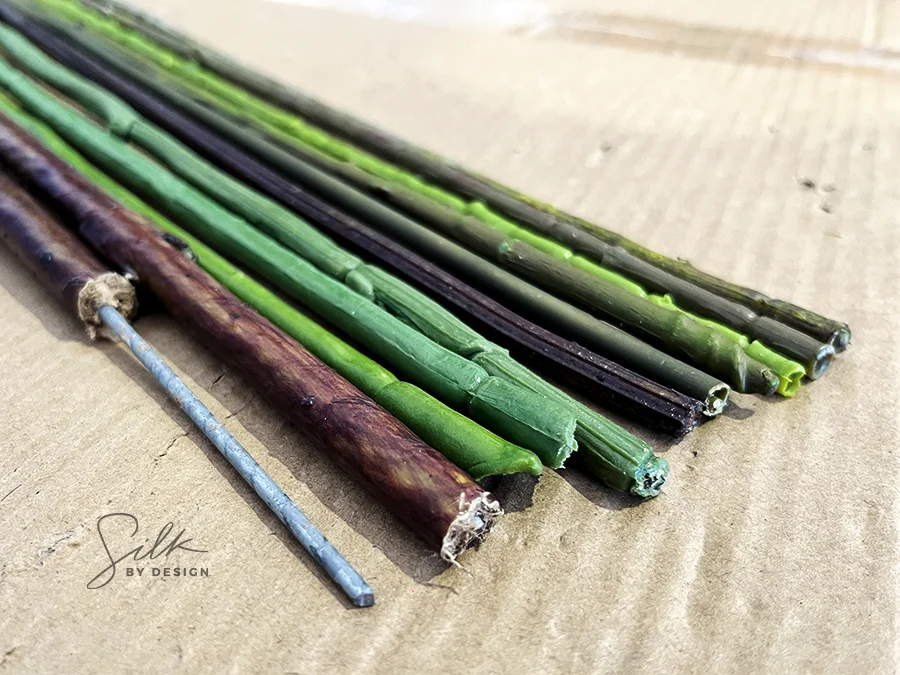
Stem thickness varies across botanical varieties:
- Delicate sprays and fillers: Contain slender 20-to-24-gauge wire that can be bent easily by hand.
- Heavy floral stems (e.g., banksias, proteas, open magnolias): Feature thick 14-to-18-gauge steel or double-wire cores that require high-leverage cutting tools.
- Bare branch stems and greenery often contain solid aluminium or coiled steel covered with thick rubberised coatings.
What Tools Do You Need to Cut Artificial Stems?
Cutting artificial flowers requires tools designed for metal wire and tough synthetic casings. Using the wrong tool can damage the tool, crimp the plastic casing, fray the internal fibres, or create sharp burrs that scratch your hands or vase.
| Tool Name | Best For | Pros | Watch Out For |
| Spring-Loaded Wire Cutters | General stems, medium-gauge wire, foliage | Comfortable grip, low hand strain, compact | Struggling on stems thicker than 1 cm |
| Mini Bolt Cutters | Thick wire or multi-wire stems | Clean, single-squeeze cuts through plastic and wire | Bulky to store, heavier unit. |
| Bypass Floral Snips | Paper-wrapped wired greenery, delicate petal stems or leaves | Precise cutting in tight cluster spots | Not suited for heavy steel stems |
| Needle-Nose Pliers (with wire notch) | Bending stems, tight floral adjustments | Dual-purpose tool for shaping and pinching | Smaller cutting surface area |
In our studio, we recommend 180 mm spring-loaded diagonal wire cutters. The internal spring mechanism resets the jaws automatically after every cut, which saves substantial wrist fatigue.
How Do You Determine the Right Stem Length for Your Vase?
Before we can start cutting the stems, we need to know how long to cut them. To achieve a balanced floral display, follow the florist’s rule of thumb: your arrangement should stand approximately 1.5 to 2 times the height of your vase. Stems that sit too low make blooms look cramped, while excessively tall stems make the vase unstable and prone to tipping over. Always reseal cut ends with hot glue to prevent rust and protect glass vessels.
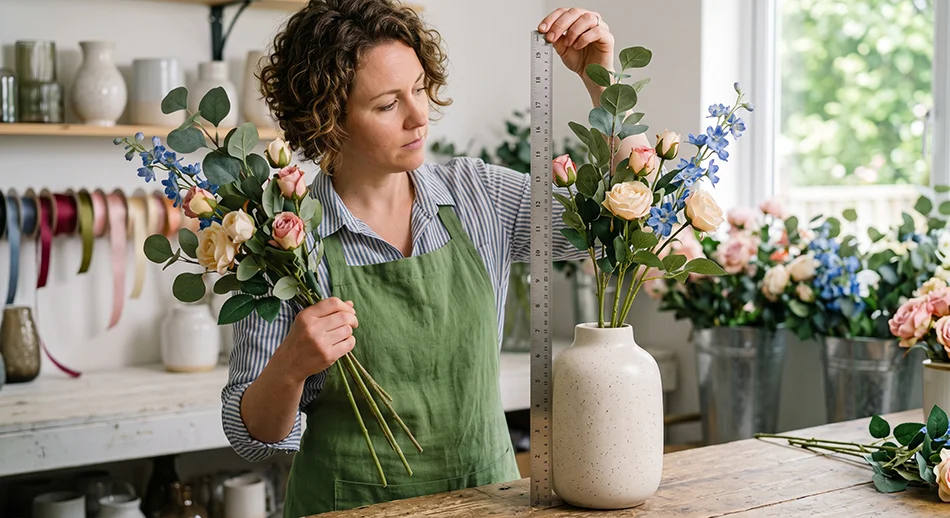
Follow this step-by-step sizing method:
- Stand the vase on a level surface.
- Hold the stem externally against the vase: Position the flower bloom where you want it to float above the rim.
- Mark your cut line: Use your thumb, a piece of painter’s tape or a marker to mark where the base of the stem meets the inside bottom of the vase.
- Leave an extra 3 to 5 centimetres: Always make your initial cut longer than you think you need. You can always trim more off, but you cannot easily reattach cut material.
- Stagger your cuts: Trim primary focal flowers (like roses or lilies) slightly taller, and cut secondary foliage 5 to 7 cm shorter to build natural visual depth.
Step-by-Step: How to Cut Artificial Flower Stems Safely
Trimming wired stems cleanly requires a simple two-phase motion: score the outer plastic sleeve, then cut the inner wire without crushing the stem.
Step 1: Score the Outer Casing
Place the stem between the blades of your wire cutters at your marked cut point. Gently squeeze just enough to bite through the synthetic coating without attempting to slice the internal wire.
Step 2: Rotate the Stem
Rotate the stem 180 degrees and squeeze gently again. This cuts a clean perimeter groove through the outer plastic, paper wrap, or rubberised coating, preventing the outer layer from tearing.
Step 3: Snip Through the Wire
Place the stem under your arm, pitching it between your arm and body. This allows you to use two hands and stops the stem from falling to the ground. Squeeze firmly with the base of the blades (closest to the tool’s hinge, where leverage is greatest). You will hear a sharp click as the wire cuts through cleanly.
Step 4: Angle Cuts for Foam Inserts
If you are pushing stems into dry floristry foam, cut the stem at a 45-degree angle. A sharp, angled tip penetrates dense floral foam effortlessly without displacing the foam core.
Studio Tip: If you do not have heavy-duty wire cutters, use standard craft wire cutters to score the wire core, bend the wire back and forth at the crease until metal fatigue snaps it, then trim away any excess plastic skin with craft scissors.
The Non-Permanent Alternative: Bend Stems Instead of Cutting
If you own an opaque ceramic or stone container, you rarely need to cut your artificial flowers. Bending the stems preserves the original length so you can reuse them in taller vessels later.
Bending artificial stems adds natural weight to the base of the vessel, which lowers the centre of gravity and helps prevent top-heavy arrangements from blowing over in drafty rooms.
Follow these simple steps:
- Hold the stem against your vase to identify the excess length at the bottom.
- Form a clean 90-degree fold in the stem using your thumbs, then fold it back up against itself into a “U” or “Z” shape.
- If the bottom bundle is too wide for your vase neck, pinch the fold flat with needle-nose pliers.
- Insert the folded stem into your container. The tension created by the folded wire also helps hold the flower upright without floristry putty.
For clear glass vases, cutting remains the tidiest visual option unless you plan to hide the folded bottoms with river pebbles or other decorative elements.
How and Why You Must Reseal Cut Stems
Cutting an artificial stem exposes the inner steel wire to ambient air and leaves ends that can be sharp.
If you style your flowers in clear glass vases or use simulated acrylic water, this exposed wire will begin to oxidise (rust) within weeks, producing brown stains that permanently ruin your glass.
Applying a small drop of hot glue creates an impermeable silicone seal that shields the metal from oxygen and safeguards interior vase surfaces and ensures the ends are sealed and they won’t snag on clothing or scratch anything.
How to Reseal Cut Ends in 3 Minutes:
- Heat a standard hot glue gun with an all-purpose clear glue stick.
- Hold your trimmed stem upside down so the cut metal tip faces upward.
- Dispense a generous bead of hot glue directly over the exposed wire and plastic edge.
- Let the glue cap cool undisturbed for 60 seconds until it cures clear and firm.
This simple glue cap forms a smooth, rubbery barrier. It stops rust, keeps rough wire burrs from scratching expensive vases, and prevents moisture ingress.
How to Lengthen Artificial Stems That Are Too Short
When you want to showcase a shorter stem in a grand vase, you do not need to discard it. You can build a sturdy, discreet stem extension using garden stakes and floral binding tape.
What You Will Need:
- Slender green garden stakes or narrow bamboo skewers
- Green or brown floral paper tape (self-sealing)
- Small cable ties (optional, for heavy stems)
| Extension Method | Best Application |
|---|---|
| Bamboo Stake | Medium flowers, heavy single blooms in opaque ceramic pots |
| Wooden Dowel | Very thick, top-heavy branches requiring rigid support |
| Heavy Craft Wire | Curved vases where the extension must bend with the glass |
| Old Stems | Allows you to match the colour, size and characteristics of the original stem. |
The 4-Step Extension Method:
- Overlap the Stem and Stake: Place your artificial stem against a green bamboo stake with an overlap of at least 7 to 10 centimetres.
- Anchor the Splice: Fasten the overlapping section tightly with two small cable ties (one at the top of the overlap and one at the bottom), clipping the tails flush.
- Wrap with Floral Tape: Stretch green floral tape slightly to activate its adhesive. Starting 3 cm above the joint, wrap spirally downward at a 45-degree angle, overlapping each pass halfway.
- Smooth and Seal: Press the tape firmly against the joint with warm fingers. The wax coating fuses together to create a neat, uniform stem that blends into your arrangement.
Frequently Asked Questions
The vast majority of artificial flower stems have a central metal wire to allow realistic shaping and weight support. Only soft foliage, trailing vines, and budget plastic filler plants come without internal wire. Always inspect the cut end or test flexibility before using scissors.
Never put trimmed artificial stems in real water unless the cut wire core is completely resealed with hot glue or silicone sealant. Unsealed steel wire rusts rapidly, discolouring the water and staining the vase. Faux water made from two-part clear resin is a permanent alternative.
If you lack wire cutters, score the outer plastic coating with a utility knife or serrated blade, bend the stem repeatedly at the score line until metal fatigue snaps the wire, and snip away the loose plastic skin. Never try to cut through the metal core with kitchen scissors.
Cutting the stem will not loosen leaves if you cut below the lowest foliage branch. Most leaves are injection-moulded directly onto the central stem or secured with floral adhesives. If a lower leaf slips down after trimming, secure it with a tiny dab of clear craft glue.
Bring Your Floral Arrangements to Life
Trimming and shaping faux stems is not an exact science; it is a creative craft. By investing in a sturdy pair of wire cutters, applying the golden 1.5 proportion rule, and sealing cut tips with a touch of hot glue, you can tailor any bloom to sit gracefully in your favourite vase.
Ready to curate your next display? Explore our handcrafted collection of luxury silk flower stems or discover our floral stylists’ floral arrangements for homes and corporate spaces across South Africa.